
Sunshine in my basket, foraging St. John’s Wort in the Southern Highlands
For me, there is something so rejuvinating about wandering through the Southern Highlands. The sweet smell of the paddocks, the soft hum of insects, the way the golden light settles on the hills. On a recent forage, I came across one of my favourite herbs glowing along the roadside: St. John’s wort (Hypericum perforatum), its bright yellow blossoms practically humming with vitality, and swaying in the wind. Absolutely delightful.
Depression, low mood, PMS-D (premenstrual sadness), and the emotional weight of grief are concerns I support in clinical practice every day. St. John’s wort remains one of my favourite supports for gently lifting emotional burdens and offering respite during life’s heavier seasons. Numerous randomised controlled trials now support its traditional use, reinforcing its effectiveness and safety within modern clinical practice. Lets deep dive into how this herb works and what it does for mood.
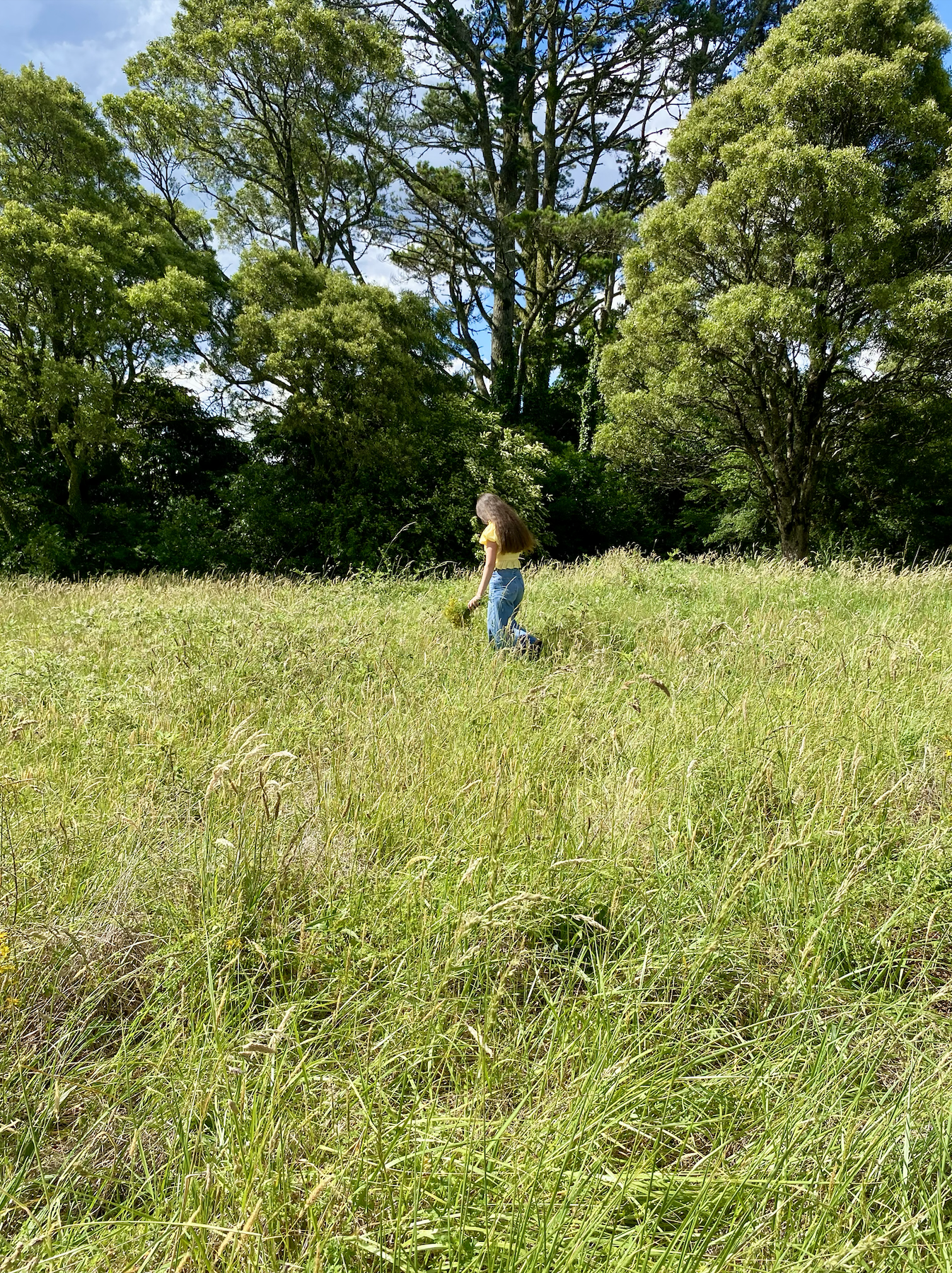
Picking in Robertson, NSW
Known for centuries as an herb that brings light to the darker corners of the mind, St. John’s wort blooms in high summer, but I’ve recently noticed it blooming in early November. The flowers are the plant part used medicinally.
Support for lifting emotional burdens
Self-doubt often creeps in. We may question our path, our worth, or whether we’re “enough”—even when we are more than enough. St. John’s wort has long been celebrated for its ability to “let the light back in,”. The way I like to describe how it works is its ability to lighten or lift heavy emotional loads.
Herbalists traditionally turn to St. John’s wort for:
Uplifting low mood and easing depression
Infant loss
Post-partum depression
The grief of infertility
Burnout
Saddness and loss
Processing emotions and trauma
Softening nervous tension and stress
Seasonal low mood
Calming nerve-related discomfort, such as sciatica or post-herpetic nerve pain
Studies are suggesting its active constitutents hyperforin and hypericin act on neurotransmitter systems, modulating serotonin, dopamine and others, altering our perception of happiness, reward and ultimately, changing mood regulation.
It is important you take this herb consistently for 2 weeks before full benefits will be noticed.
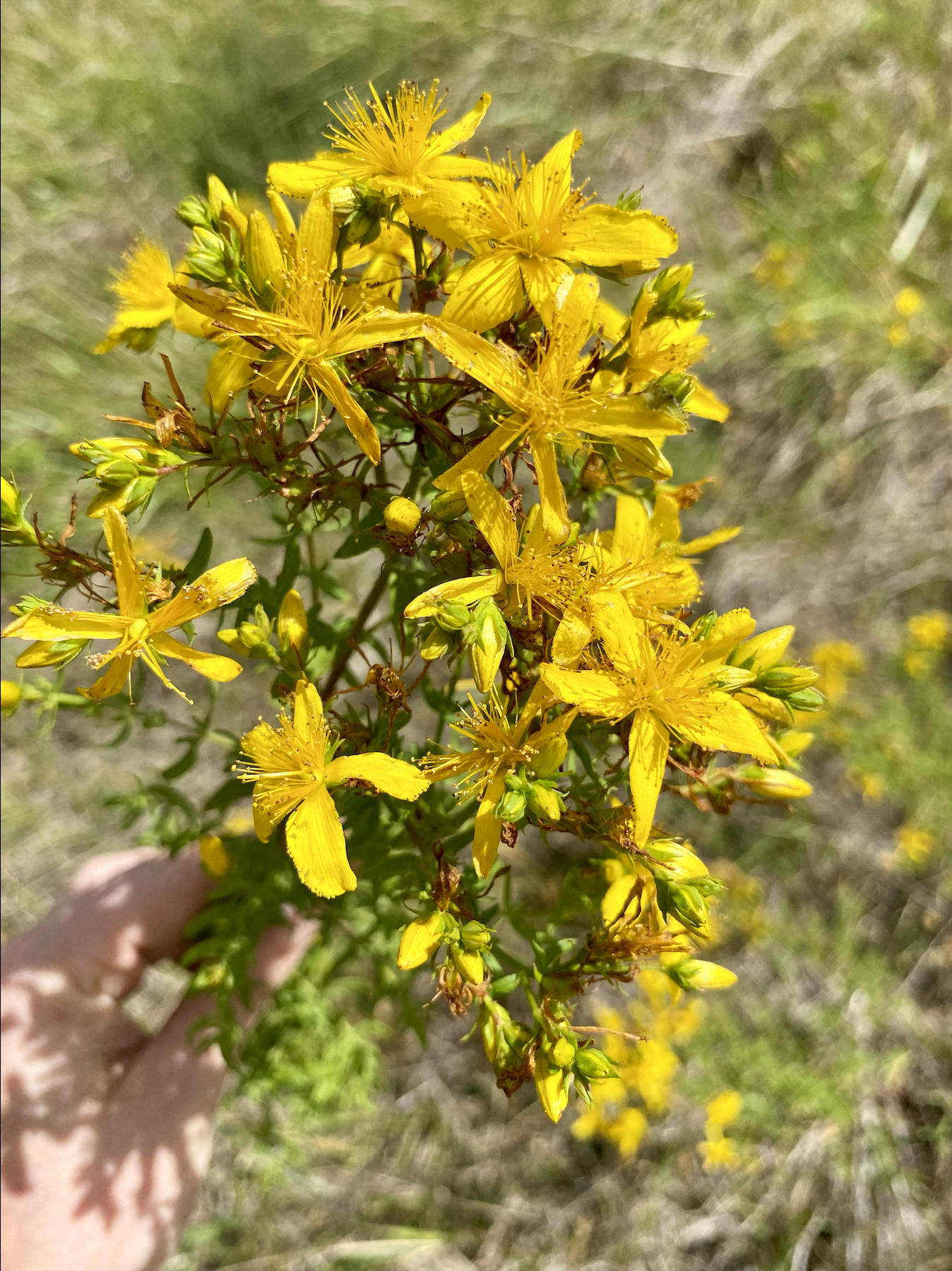
St. John’s wort can be identified by the tiny “dots” visible on the outside of the petals and by the distinct red or purplish stain left on the skin when the yellow florets are gently squeezed.
A touch of sun for your nerves
One of my favourite ways to work with St. John’s wort is through an infused oil. When those golden blossoms are placed in a jar of good-quality oil and left in the sun, they create the most beautiful deep red infusion, almost like the plant’s own warmth captured in liquid form.
Used topically, this oil is soothing for nerve pain and open wounds. It was traditionally used on battlefields for its vulnerary or wound healing action. I love that this is a reminder that emotional and physical states are intertwined and tending to the body often helps lighten the mind.
A word of caution
While St. John’s wort is a generous and powerful plant, it’s also one that deserves respect. It can interact with several medications—especially hormonal contraceptives, SSRIs (anti-depressants) and certain heart medications, so this is a herb that is not to be self-prescribed. And because it can increase sensitivity to sunlight, extra care is needed for those who burn easily.
Nature’s invitation to return to yourself
Foraging St. John’s wort this weekend felt like gathering handfuls of sunshine—a reminder that even when doubts creep in, there are herbs all around, offering warmth, clarity and support.
